Turf Blaster® Case Study · The Book on Hydroseeding, Ch. 36

Grow grass anywhere — even on a roof.

A hydroseeding crew was asked to establish turf on one of the largest green roofs in North America — built over the underground Croton Water Filtration Plant in Van Cortlandt Park, the Bronx. The catch: the roof wasn't soil. It was engineered fill with almost no life in it. Here's how the right slurry turned it into a lawn.

See the 7-2-5 BSA that did it
400,000+
sq ft of roof to establish
Days
to visible germination
~8 wks
to dense, established turf
0
organic content in the fill to start

The situation

A lawn with no soil under it

A green roof was specified over the Croton Water Filtration Plant — a roof system covering more than 400,000 square feet, sitting on engineered fill designed for drainage and structural performance, not for growing grass.

That fill had virtually no organic content, very little nutrient-holding capacity, and drained fast. A standard seed-and-mulch shot would green up on the surface, then decline the moment water and nutrients washed straight through the profile.

🧠 The decision point

Treat it as a soil-building problem, not a seed-cover problem. Spray a conventional hydroseed mix and hope — or build a slurry that adds biological life to an otherwise lifeless root zone?

The crew chose to build the soil.

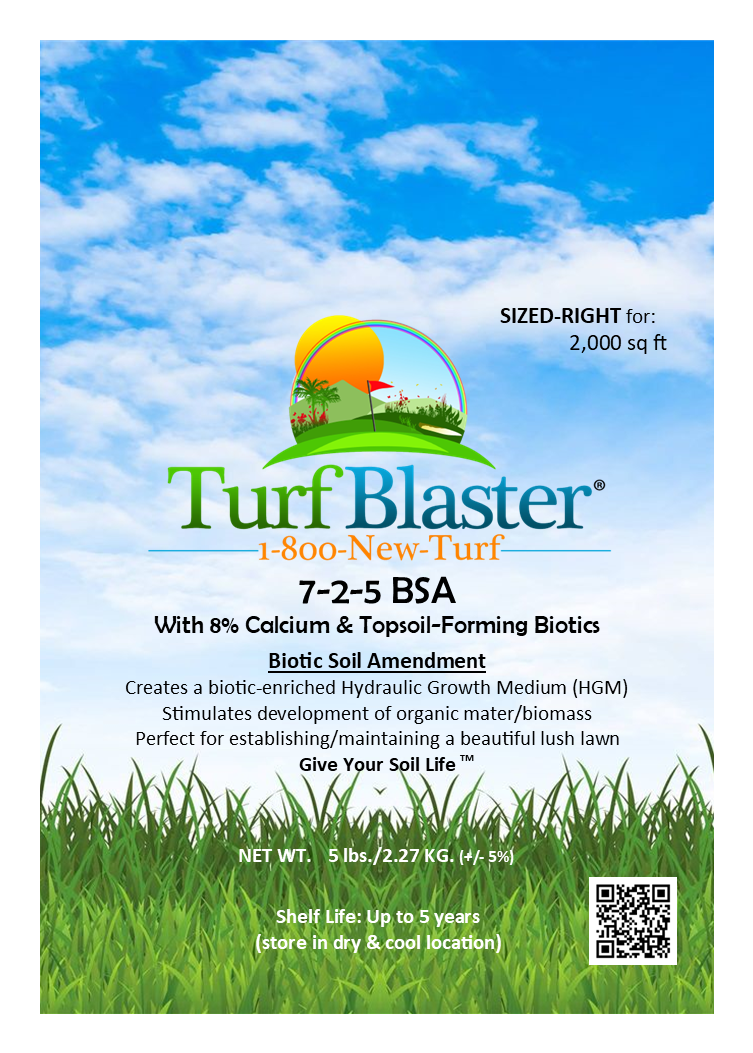
Turf Blaster 7-2-5 BSA

The action

Build the growing medium right in the slurry

The application was built around an organic biotic soil amendment — Turf Blaster 7-2-5 BSA — blended into the hydroseeding slurry with the seed and mulch. Instead of only protecting seed, the slurry carried:

  • Organic fertility — a 7-2-5 charge with 8% calcium to feed new turf
  • Biological inoculant — living biology to wake up a sterile root zone
  • Organic matter that starts forming topsoil in place

In one pass, the slurry did more than cover seed — it began turning engineered fill into a functional growing environment.

The result

Germination in days. Dense turf in about eight weeks.

The roof showed visible germination within days and established dense turf within roughly eight weeks. The project met its performance expectations and proved a point that carries to every hard site:

Hydroseeding can succeed on a highly engineered substrate — when the slurry is designed around the site instead of the other way around.

🌱 The lesson

When a site can't support plant life on its own, the contractor has to solve more than coverage. Match the slurry to the substrate and you can turn an unworkable surface into a viable growing medium.

The site dictates the recipe. A roof, a reclamation slope, a sand pad, a mine spoil — the fix is the same: build the soil in the tank.

Grow it anywhere

The Turf Blaster tough-substrate kit

What we reach for when the ground won't grow grass on its own.

Got a site that shouldn't grow grass?

Tell Dusty the substrate and the square footage — he'll size the mulch, seed, and biology to match.

Case study adapted from The Book on Hydroseeding, Chapter 36. Croton Water Filtration Plant Green Roof, Van Cortlandt Park, Bronx, New York.